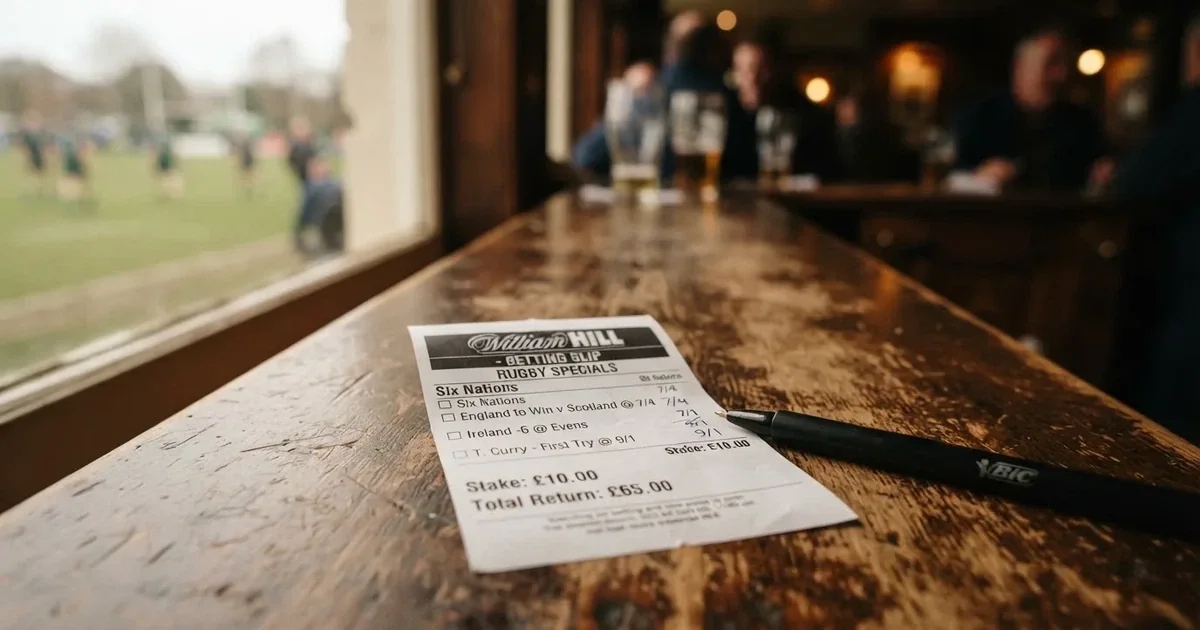
Rugby Betting in New Zealand 2026: Who May Take Your Bet, and on What
 Available in US
As of 30 October 2026, the data on this page has been checked against the Racing Industry Act 2020 (as amended) and the Department of Internal Affairs’ public position on online sports and racing betting.
The first thing any New Zealand punter learns when they start looking for a rugby bet is that the choice of operator is already made. Since 28 June 2025, TAB NZ and its online sister brand Betcha are the only operators that may lawfully take online sports and racing bets from people in New Zealand. The amendment to the Racing Industry Act 2020 that introduced section 74AAA closed the door that offshore bookmakers had been standing in for years, told unlicensed providers to withdraw with immediate effect, and left two brands where a market used to have many. This page walks through what that means in practice: how a rugby bet pays back, how the odds are built, which tournaments matter on the calendar, where the safer-gambling tools sit inside the only lawful product, and what offshore brands look like for a player who knows the law.

- How Punters Shape Their Rugby Strategy
- How a Rugby Bet Is Built and Settled
- The Rugby Calendar and What It Means for a Kiwi Bettor
- The Top-Ranking Comparison
- The Law: Section 74AAA in Plain Terms
- Responsible Gambling in the Only Lawful Product
- Live Betting on Rugby with TAB NZ
- Safer Gambling Around Rugby Season
- Frequently Asked Questions
How Punters Shape Their Rugby Strategy
Most “tip” content for rugby starts with a prediction and ends with a stake. That ordering is backwards. A bettor who reads the form first, then chooses a market, then prices it against the bookmaker’s margin, will run further than one who picks a side and looks for the price afterwards. Strategy here means working out what a price is worth before it is taken, and that depends on the market the bookmaker offers — handicaps for the close fixtures, totals for the ones with a weather angle, head-to-head for the matches that have nothing between the sides.
A punter’s bankroll is the unit that does the surviving. Putting aside a fixed stake, then sizing each wager to a fraction of that bank (one to three per cent is the common range), turns a bad week from a wipeout into a drawdown. The point of a bankroll is not to be rich at the end of the season; the point is to still have money to bet with after the All Blacks lose to Argentina in Christchurch. The same numbers apply whether the bettor bets weekly or once a month: a stake sized to the bank holds, a stake sized to the tip never does.

Predictions work best as filters, not as outcomes. A tip that names a winner does one job — narrows the field. The punter still has to ask which market the tip applies to, what the price is, what the margin on that market is, and what the bet is to the punter’s bank. A six-nation pick that arrives without a price is a guess; a six-nation pick that arrives with a handicap and a price is the start of a bet.
Live betting changes the cadence. The price swings as the match moves, and a punter who has done the homework pre-match can read those swings faster than the market does. Whether that produces a profit over a season is another matter — the margin on in-play is higher than pre-match in most books, and the time to place the bet is shorter. The skill is recognising the gap, not just spotting the move.
Discipline is the part no tipster page writes about. The punter who closes the app after three losses, who keeps a record of every bet, who reviews losing weeks the same way as winning ones, outlasts the one who chases. New Zealand’s market is small in operator terms; that smallness is itself a constraint, because there are fewer places where a price error shows up, and the punter who logs his bets learns which of the two lawful brands prices more sharply on which market.
Building a Bankroll Around a New Zealand Season
The Super Rugby Pacific season runs from late February into June, the All Blacks’ July tests sit across the winter, the Rugby Championship carries August into October, the northern-hemisphere autumn tests close October and November, and the Six Nations fills February and March on the other side of the world. A bankroll that follows the calendar — heavier as Super Rugby and the Rugby Championship arrive, lighter midwinter — gives the punter more bets in the markets he knows.

A season plan is just a budget in disguise. The punter sets aside a fixed amount per competition, breaks it into weekly stakes, and walks away when the weekly budget is gone. The temptation to top up after a loss is exactly the temptation the budget is there to block.
Reading a Tip Before You Take It
A tip earns its keep when it carries the price, the market, and the reason. “All Blacks to win” is not a tip; “All Blacks −9.5 at 1.90” is, because the punter can check what that handicap means against recent form, recent margins, and the opponent’s run of results. The reason matters most when the punter disagrees with the tip — a tip with no reason is one the punter cannot argue with, and is consequently one he cannot test.

The free tip lists that circulate around major tournaments share a flaw: they pick a side, not a market. The punter who treats them as a starting point — narrowing a 32-team field into ten names, or a ten-fixture weekend into three — gets the value and skips the bias.
How a Rugby Bet Is Built and Settled
Rugby union is a scoring sport: a try is worth 5 points, a conversion 2 points, a penalty 3 points, a drop goal 3 points. A rugby union team starts with 15 players on the field, and the match is two 40-minute halves with an interval of up to 15 minutes. Rugby league plays 13 a side and scores tries at 4, conversions at 2, penalty goals at 2, and field goals at 1 — but the bulk of Kiwi rugby betting volume sits on union, where the All Blacks and Super Rugby Pacific carry the calendar. League’s main kiwi outlet is the NRL, also covered by TAB NZ and Betcha.

The most common rugby bet on TAB NZ is the head-to-head: which team wins, with the draw a third outcome on most regular-season matches. A typical Super Rugby Pacific game lines up at decimal odds in the $1.40-to-$3.60 range for the favourite, with the long shot nearer $2.50-$3.00. Handicaps — called line betting in the Australian and New Zealand markets — add or subtract points to one side to flatten the price: an All Blacks −13.5 line at $1.90 means the All Blacks have to win by 14 or more for the bet to pay; the opposing team at +13.5 wins the bet if it loses by 13 or fewer, or wins outright. The totals market, also called over/under, asks whether the combined score goes over or under a line the bookmaker sets — usually in the mid-40s for union matches that both sides enter as attacking units.
Same-game multis — called SGMs in the betting apps and “Multi” on the TAB slip — let a punter combine two or more legs from one match into a single bet whose price is the product of the legs. All Blacks to win, with over 45.5 total points, with a first-half try scored by a named player, becomes one bet at a longer price than any of the legs on its own. The trap is the margin: each leg has its own margin, and SGMs compound them.
What a Winning Bet Pays Back
The arithmetic of a winning bet is simple. A stake of $10 at decimal odds of $2.50 returns $25 — the original stake plus a $15 profit. The same $10 at $1.50 returns $15, a $5 profit. For a combination bet, the leg prices multiply: two legs at $1.50 each become a $2.25 combination, and the $10 stake returns $22.50 if both legs win. The compounding is what makes multis popular; it is also what makes a single losing leg wipe the whole bet out.

This is what the price gives a punter in cash terms. The chance of winning is a separate question that the odds do not answer on their own — implied probability is what the margin is hiding, and that is the number the punter needs to read next.
The Bookmaker’s Margin, Hidden Inside Every Price
The bookmaker’s margin is the cut the bookmaker takes on every market, expressed as a percentage of every dollar staked. The shape it takes inside the odds is best seen by example. Take a two-way market — which side will win, with the draw removed — priced at $1.90 and $1.90. The implied chance of each outcome, before any margin, is 1 ÷ 1.90 = 52.63%, and the two together may sum to 105.26%. That 5.26% over 100% is the margin: for every $100 staked on this market across both outcomes, the bookmaker keeps roughly $5.26 and pays out the rest.

A 5% margin is a workable number for an outdoor sport; 8-10% margins are common on niche markets and on in-play, where the price moves faster than the punter can read it. The punter who learns to read the margin picks markets, not sides — the side with the best team might still sit on a 9% margin if the bookmaker knows the public will back that team anyway, and a sharp bettor waits for a different match with tighter pricing.
Market-Specific Margins in Practice
A bookmaker’s headline margin on the Rugby Championship 1X2 sits around 5-6% on a well-priced week; the same bookmaker’s margin on first-tryscorer markets drifts above 12% because the field is wider (15 starting players per side, plus bench scorers). Handicaps tend to run tighter than head-to-head, because the bookmaker has to balance the line as well as the price. In-play markets run looser, because the bookmaker sets prices faster and the punter has less time to shop.

For the punter, the consequence is a market-selection problem rather than a side-selection one. The same match produces a winning bet on the handicap at one price and a losing bet on the first-tryscorer at another, with the punter’s choice of market being the variable the margin is acting on.
The Rugby Calendar and What It Means for a Kiwi Bettor
Super Rugby Pacific
Super Rugby Pacific is the southern-hemisphere club competition running from late February through to a final in mid-June. Most weeks carry five or six matches; the betting volume is concentrated in the All Blacks-affiliated franchises — the Blues, the Chiefs, the Hurricanes, the Crusaders, and the Highlanders — with Fijian Drua and Moana Pasifika growing into market presence. Handicaps run tighter here than international rugby because the gap between franchises is smaller, and the head-to-head market tends to be the best-priced on a typical Super Rugby weekend.

The Rugby Championship
The Rugby Championship — which began as the Tri-Nations in 1996 and was renamed in 2012 when Argentina joined — runs from early August through to late September, with the All Blacks playing Australia, South Africa and Argentina home-and-away. Each team plays six matches across the window, with byes around the August schedule. Margins on Rugby Championship 1X2 markets tend to be tight because the bookmaker has more data on these teams than on most northern-hemisphere sides; the All Blacks and Springboks markets typically price inside 5%, with Argentina-Australia the looser game of the round.
The Six Nations
The Six Nations — which traces its origins to the Home Nations Championship that began in 1883 — fills February and March on the calendar, with five rounds across six weekends. The matches play out across New Zealand’s late summer and early autumn, with evening kickoffs in New Zealand that fall across European afternoons. The England-France fixture is usually the highest-margin match of the round for an Australian-based bookmaker, because the data between these two teams is roughly even.
All Blacks July Tests
The July tests — a single midyear window that the All Blacks typically use for one or two home matches against northern-hemisphere opponents, plus one tour fixture — produce sharp head-to-head pricing because All Blacks opposition at Eden Park carries an established home advantage. Handicaps of 13-18 points are common for the top opponents; the totals market on these matches tends to line in the high 40s.
The Rugby World Cup
The Rugby World Cup is held every four years; the first tournament was held in 1987 in Australia and New Zealand, and New Zealand won that inaugural event. The next Rugby World Cup is set for 2027 in Australia; the women’s tournament sits on its own cycle. World Cup markets open 12-18 months before kickoff, with early prices on the outright winner carrying wider margins than the in-tournament head-to-head because the bookmaker has limited data on squad availability that far out. From the quarter-finals, prices tighten; the final is the most efficiently priced rugby match on the calendar.
The Top-Ranking Comparison
With only two lawful operators in New Zealand, the comparison is not a contest between brands for the same punters. TAB NZ and Betcha are one operator group, run by Entain under a 25-year agreement signed in 2023, with a 50/50 share of gross profits and at least $150 million a year going to TAB NZ for the first five years of the deal. The offshore brands sit below the lawful pair as a reference, because New Zealand players meet them: in advertising, in affiliate links, in box-the-comp promotional offers across the Rugby World Cup. None of them is licensed to accept wagers from people in New Zealand, and the column below says so.
| Brand | Status in New Zealand | What its own terms say on rugby |
|---|---|---|
| TAB | One of two online brands of TAB NZ, lawful under section 74AAA | Markets across rugby union and rugby league, pre-match and live, with fixed-odds and tote betting |
| Betcha | One of two online brands of TAB NZ, lawful under section 74AAA | Markets across rugby union and rugby league, sports and racing under one app, with the same racing-code rules as TAB |
| Golden Panda | Not licensed in New Zealand | Sports book, esports, virtual sports, casino — no New Zealand licence |
| RoyalistPlay | Not licensed in New Zealand | Live betting across multiple sports, no New Zealand licence |
| RTbet | Not licensed in New Zealand | Football, tennis, basketball, ice hockey, American football, baseball, live and virtual |
| Glorion | Not licensed in New Zealand | Pre-match, live, virtual, horse racing, esports, entertainment markets |
| Roobet | Not licensed in New Zealand | Soccer, basketball, tennis, esports, MMA, table tennis, with crypto account funding |
| Alawin | Not licensed in New Zealand | Football, tennis, table tennis, basketball, ice hockey, American football, baseball, plus live, virtual and esports |
| Rooster.bet | Not licensed in New Zealand | Live betting, sports promotions, esports and a Predictions section, with six odds formats |
| BetNinja | Not licensed in New Zealand | Sportsbook and casino, with a sports welcome offer described in its terms |
The two lawful brands share a betting engine, a market list and a wallet; what differs is the surface. The TAB brand carries the racing heritage and the racing forms, the older punters and the in-shop presence; Betcha runs on a younger app surface and markets itself for the all-sports punter. Both cover horse and harness racing, rugby union and rugby league and a longer list of other sports, and both carry pre-match and in-play markets. Distinguishing the two at the betting-slip level is a smaller job than it looks.
The offshore brands below the line are not a recommendation, and the law treats their serving of New Zealand customers as a breach of section 74AAA. They sit on the page as a recognition that New Zealand players see their advertising, know their names, and have to make a decision about them. The Department of Internal Affairs warned players about the absence of a New Zealand complaints route and a New Zealand harm-minimisation framework if a dispute arose; that warning is the practical answer to “why bother with an offshore bookmaker at all”.
TAB
TAB carries the formal inheritance of the racing and sports-betting monopoly that took its modern shape under the Racing Industry Act 2020. The mobile app — “TAB – Racing & Sports Betting” in the New Zealand App Store, published by the New Zealand Racing Board and first released on 8 September 2014 — covers horse and harness racing, rugby union and rugby league and other sports, pre-match and live. The app carries a 17+ App Store age rating, while the published terms state the betting age is 18 or over. The live product pairs in-app betting with Trackside live race streaming and racing form, Blackbook and Jockey Challenge tools, all bound to a simplified wallet that holds deposits and withdrawals in the same place.
TAB’s strength on rugby is the depth of the racing and sports betting product combined: the racing form sits next to the rugby markets, and the punter who bets on horses and rugby in the same session does not need a second account. The weakness is the residual complexity of a product that has carried racing markets since the 1950s — Quinella, Exacta, Trifecta, First4, Double, Treble, Daily Double, Running Double, Quaddie, Big6, all named on the published betting rules, all settled against the same racing tote. A first-time rugby punter who is also a first-time racing punter is reading two rulebooks at once.
For the punter who treats TAB as the default and wants rugby with racing on the same wallet, this is the place. For the punter who wants a slim rugby-only interface, Betcha is the comparison.
Betcha
Betcha launched on 6 August 2024, published on the New Zealand App Store by Entain New Zealand Limited. Betcha covers horse, greyhound and harness racing plus rugby, NRL, MMA/UFC, NBA, NFL, tennis, cricket, football, motorsports and esports, all under one sign-in. The product positioning is the app-first all-sports punter: a younger interface, a single wallet for racing and sports, and a sign-up that has been built for the post-2025 monopoly rather than the pre-2025 multi-brand market.
The strength is the modern app surface on top of the same TAB NZ betting engine. The weakness is the same weakness as TAB, because both brands run off the same product line. The punter who has not used either will find a different visual style and a similar market list.
For the punter who wants the full sports-and-racing wallet inside one app, and who is comfortable inside a recent interface, Betcha is the better fit. For the punter who already has a TAB account, the operational case for opening a second account is thin.
Golden Panda
Golden Panda runs a Sports section with a sportsbook, esports and virtual sports, alongside casino, live casino, crash games, rewards, cashback, a VIP club, Golden Goals and Prediction Markets. The brand names no New Zealand licence and is not licensed to offer bets to people in New Zealand; the section 74AAA breach applies, and the Department of Internal Affairs’ warning about no New Zealand complaints route and no harm-minimisation framework governs the dispute.
The product is broad and the app-style bets include markets that TAB NZ does not list — crash games, prediction markets on named events, esports alongside traditional sports. For a New Zealand resident, none of that product is reachable lawfully. Worth knowing the brand exists for what it advertises; not worth opening for what it offers a Kiwi punter inside New Zealand law.
RoyalistPlay
RoyalistPlay’s sportsbook offers live betting, sports promotions, results and a schedule, with football, basketball, tennis, handball, ice hockey, volleyball and table tennis among the top sports, and separate esports and Predictions sections. The brand names a Tobique Gaming Commission e-gaming licence (No. 0000002), held by Novatrix SRL — a licence that provides no authority for the brand to serve New Zealand customers.
The product is generalist across European and North American sports. Rugby is not at the top of the listed menu and the rugby market depth is the kind of thing a punter has to check inside the betting slip rather than trust from the homepage. For a New Zealand resident, the same offshore rule applies as the rest of the unlicenced brands.
RTbet
RTbet’s sportsbook covers football, tennis, table tennis, basketball, ice hockey, American football and baseball, with live betting and virtual sports. The brand names a Curaçao licence, which provides no authorisation for New Zealand wagering.
The product is sportsbook-led; rugby is one of several sports a punter might find in the schedule, not a focus. The same offshore rule applies as for RoyalistPlay and Golden Panda: the law treats the offer to New Zealand customers as a breach of section 74AAA, and the punter has no New Zealand complaints route.
Glorion
Glorion offers pre-match and live betting, virtual sports, horse racing and esports, with markets grouped into popular, niche, indoor and outdoor sports plus entertainment events such as award shows and elections. The brand names no licence that applies in New Zealand; the offshore rule applies.
The breadth of markets — entertainment, virtuals, award shows, elections — sits outside the kind of rugby focus a New Zealand punter wants. The product is unusual for the inclusion of those entertainment markets; the rugby depth is the part a punter has to check inside the app.
Roobet
Roobet’s sportsbook covers soccer, basketball, tennis, Counter-Strike, FIFA, baseball, ice hockey, MMA and table tennis, with the published terms requiring players to be 18 or older. The brand names a Curação licence (OGL/2024/687/0427), held by Raw Entertainment B.V. — a licence that is invalid for New Zealand players.
The product is crypto-funded and sports-led, with esports at the centre. Rugby is one of several sports listed but not a focal market. For a New Zealand resident, the offshore rule applies.
Alawin
Alawin’s sportsbook covers football, tennis, table tennis, basketball, ice hockey, American football and baseball, with Live Betting, Virtual Sports and esports also offered. The brand names no licence that applies in New Zealand.
The product is broad across the major American and European sports. Rugby is not the central market and the punter may check inside the app for the rugby depth on offer; same offshore rule as the broader group.
Rooster.bet
Rooster.bet’s sportsbook has Live, Sports Promotions, Results, Schedule, E-sports and Predictions sections and shows odds in six formats. The brand names a Tobique Gaming Commission e-gaming licence (No.
The product is sportsbook-first with a wide markets menu and a Predictions section that runs novelty markets. Rugby is one of several sports available; the offshore rule applies.
BetNinja
BetNinja advertises a casino welcome of EUR 1,000 bonus and 100 free spins, and a sports offer of a 100% match up to EUR 100 on the first deposit. The brand names a licence from the Union of the Comoros, which provides no standing for the brand to accept wagers from people in New Zealand.
The product is sportsbook with a casino attached and the sports welcome offer described in its own terms. Rugby is one of the markets listed; the offshore rule applies.
The Law: Section 74AAA in Plain Terms
The Racing Industry Act 2020 is the statute that creates TAB NZ as the sole betting provider for racing and sports in New Zealand. The Racing Industry Amendment Act 2025 inserted section 74AAA: no person other than TAB NZ may offer racing betting, sports betting or other racing or sports betting to a person in New Zealand, regardless of where that person is resident or incorporated. The change took effect on 28 June 2025, and the Department of Internal Affairs told providers serving New Zealand to withdraw with immediate effect.
There is no licensing route for another bookmaker and no licence register for betting, because there is only one lawful operator. The law does not geo-block offshore websites; it puts liability on the offshore operator. What this means in plain terms is that a New Zealand resident cannot lawfully place a sports or racing bet through an offshore bookmaker that has been told to withdraw, and the offshore bookmaker that accepts such a bet is in breach of section 74AAA. The Department of Internal Affairs monitors compliance under section 92A of the Racing Industry Act 2020.
The Online Casino Gambling Act 2026 licenses online casino gambling only and does not license sports betting. TAB New Zealand winning the right to apply for a casino licence does not extend the betting monopoly, and a casino-style product from a licensed casino is not the same legal product as a sports bet. Greyhound racing is closing in stages from 1 August 2026, and from that date offshore operators may not take bets on greyhound races either.
What May Be Bet on
Racing and sports betting from TAB NZ only. TAB NZ takes fixed-odds and tote (parimutuel) bets; its published betting rules define bets such as Win, Place, Each Way, Quinella, Exacta, Trifecta, First4, Double, Treble, Daily Double, Running Double, Quaddie, Big6, plus Multis and Same Game Multis. Live betting is listed in the TAB NZ apps; any statutory restriction on in-play markets is not established. There is no New Zealand betting exchange and no spread betting under the Racing Industry Act’s definition. Bets on politics and novelty markets are not established. There is no statutory per-bet cap; limits are TAB NZ’s own terms. The ban covers events held inside and outside New Zealand.
Virtual sports sit in a grey zone: the 2026 online casino law treats them as casino gambling; where TAB NZ runs virtual sports markets it does so under its own product line and the punter must check inside the betting slip for the relevant terms. Esports — Counter-Strike, FIFA, the listed esports markets — sits in a similar position: whether esports betting is “sports betting” under the Racing Industry Act is not established in the public record, and the punter’s safest reading is that any esports bet must be checked against TAB NZ’s product rules before being taken.
Tax for the Punter
Inland Revenue guidance says recreational gambling winnings are generally not taxable, and prize money from TAB horse, dog and trotting races is not taxable. A person who bets as a business is a different case: the guidance is general information, not tax advice, and a punter whose betting crosses into a regular income pattern must consult Inland Revenue or an accountant. The Online Casino Gambling Act 2026 does not change recreational-betting tax treatment.
Operator side: TAB NZ pays the Problem Gambling Levy of 0.74%, in force from 1 July 2025 to 30 June 2028. Overseas operators supplying New Zealand residents pay online gambling duty at 12% of profits from 1 July 2024, rising to 16% from 1 January 2027 — but paying duty is not the same as being lawful, and a tax payment does not make an offshore brand legal in New Zealand. The point-of-consumption charge on offshore racing and sports bets ceased on 30 June 2026.
Responsible Gambling in the Only Lawful Product
The age for TAB NZ betting is 18; betting under 18 is an offence under section 89 of the Racing Industry Act 2020. Land-based casino gambling has its own age threshold at 20, and the two must not be merged — the betting age and the casino age are deliberately different rules. TAB NZ accounts need a verified New Zealand address and identity, so a New Zealand resident who is 18 or older can open an account; a New Zealand resident who is 16 or 17 cannot.
TAB NZ lists deposit limits, time-outs and self-exclusion in its apps, and a self-exclusion applies across its brands (TAB and Betcha). The exclusion blocks a return on the same brand and the matching brands under the same operator. There is no single national online-betting exclusion register; the register that the casino law will require is for online casinos only, and it does not extend to sports betting at TAB NZ.
TAB NZ must keep the risks of problem and underage gambling minimised, and pays a Problem Gambling Levy of 0.74%. The free Gambling Helpline (0800 654 655) and text line 8006 sit inside the published safer-gambling material, alongside Safer Gambling Aotearoa and the formal help lines. Help is a feature of the lawful product, not a bolt-on.
The Tools Inside the App
A deposit limit caps the amount of money a punter can load into the wallet across a chosen period — daily, weekly or monthly. A time-out pauses the account for a chosen window from 24 hours up. A self-exclusion closes the account for a longer window — six months, a year, or longer — and reverses only after the window has elapsed and the punter has gone through the reactivation steps. The punter who feels his betting has slipped outside the casual range sets one of these tools at the first sign of a slip, not after.
Reading the Help Lines
The Gambling Helpline is free, runs 24 hours, and is staffed by counsellors who know the New Zealand system. Text 8006 from a mobile works the same way. Safer Gambling Aotearoa is the policy body; the punter who wants the regulatory framing goes there, not the helpline. The punter who wants someone to talk to at 11 pm on a Tuesday calls the helpline.
Live Betting on Rugby with TAB NZ
Live betting on TAB NZ sits inside the same app as the pre-match markets, with the odds moving as the match moves. The bookmaker’s products are pre-match and in-app live markets; the punter sees a price shift when a try is scored, when a yellow card is shown, or when a substitution changes the shape of a side. The Section 74AAA framework does not separately restrict in-play markets, and TAB NZ’s own terms govern what the punter can and cannot bet on once the whistle has gone.
The margin on in-play markets is wider than on pre-match, because the price has to move faster than the punter can read it. The punter who has done the pre-match homework — knows the team’s shape, knows the bench’s likely impact, knows whether the favourite’s handicap is at the edge — reads those moves with an edge that the casual in-play punter does not. The edge narrows fast, and the punter who treats live betting as a different product from pre-match, with a different margin, will be the punter who keeps his bankroll longer.
Cash Out and Same Game Multis
TAB NZ’s published product line includes Same Game Multis — a multi whose legs come from one event — and a cash-out feature on selected markets. A cash-out returns a portion of the bet’s value before the bet is settled, locking in a smaller win or a smaller loss. A Same Game Multi compounds the per-leg margin; a punter who plays SGMs with one leg he has not priced is paying a margin on a leg he cannot evaluate. The cleanest SGMs combine a market with a margin the punter can read (a handicap) and a market with a known base rate (over/under on totals), and drop the player-prop legs where the margin is highest.
The Session Shape
A live betting session begins before kickoff: pre-match bets placed for the value they offer, then a watch-and-wait approach through the first quarter. The price swings after the first points are scored; the punter who has a thesis on the handicap is best placed to act. By halftime the markets have settled, the margin on in-play has tightened, and a punter who has not yet bet on the match is closer to reading it than betting on it. The third quarter is the live betting sweet spot; the final ten minutes rarely produce a price worth chasing.
Safer Gambling Around Rugby Season
The rugby calendar builds naturally into a longer betting arc: Super Rugby Pacific from late February to mid-June, the July tests in the middle of the New Zealand winter, the Rugby Championship from August into October, then the late-year international window. A punter whose betting extends across the whole calendar faces a different risk from the punter who bets only on All Blacks matches. The risk is the regularity of small bets — a parlay here, an over/under there, a multi on the weekend — adding up to a stake the punter has not budgeted.
The tools inside the TAB NZ app cover that risk: a deposit limit set weekly is the sharpest single tool, because it forces the punter to act at a chosen boundary rather than after a losing streak. A time-out across the mid-year window, when the international rugby calendar is quiet, lets the punter reset before the All Blacks’ July tests. A self-exclusion across the summer months breaks the chain before the new Super Rugby season builds it again.
A Practical Reader Check
Before placing the next rugby bet, the punter can do four checks in five minutes. (1) Confirm the deposit limit is at the right number. (2) Confirm the bet is sized as a per-cent of the bank, not as a guess at the price. (3) Confirm the market has been priced for margin before the bet was placed. (4) Confirm the next help-line number is on the phone, even if the bet is small. None of these steps is the kind of thing the betting slip will remind the punter of.
Frequently Asked Questions
How does rugby handicap betting work?
A handicap adds or subtracts a set number of points from one side’s final score before the bet is settled. The favourite wins the handicap bet only if it wins by more than the line; the underdog wins the handicap bet if it loses by fewer points than the line, draws, or wins outright. Handicaps flatten the price into a closer-to-even money line on both sides and keep the bookmaker’s margin tighter than on head-to-head markets.
How to bet on rugby games?
The practical order is market, price, stake. Choose the market that fits the match (handicap for the close ones, totals for the open ones, head-to-head for the ones with nothing between the sides), check the price against the market’s margin, and place a stake that is one to three per cent of your bankroll. Settling the bet follows the standard rules: head-to-head on the final score with the draw a third outcome on regular-season matches, handicaps with the line added to or subtracted from the chosen side, totals on the combined score over or under the line.
What are the betting odds on 2026 rugby world cup?
The 2026 Rugby World Cup does not sit on the calendar in its standard four-year cycle — the next men’s Rugby World Cup is in 2027 in Australia, with the women’s cycle on its own schedule. Outright markets for the 2027 tournament opened 12 to 18 months before kickoff, with early prices carrying wider margins because squad availability is unsettled that far out. From the quarter-finals onward, prices tighten and the final is the most efficiently priced rugby match of the calendar.
Which bookmaker may lawfully take sports and racing bets in New Zealand?
TAB NZ, operating under the Racing Industry Act 2020, is the only provider lawfully offering racing and sports betting to people in New Zealand since section 74AAA took effect on 28 June 2025. Its two online brands — TAB and Betcha — are the only online sports and racing bookmakers a New Zealand resident may use. Offshore brands are not licensed to take bets from people in New Zealand, and the Department of Internal Affairs has told providers serving New Zealand to withdraw with immediate effect.
How is the return on a bet worked out from the stake and the odds?
Return is stake multiplied by decimal odds. A $10 stake at $2.50 returns $25, which is the original $10 stake plus a $15 profit. For a multi bet the leg prices multiply into a single price: two legs at $1.50 each give a $2.25 combination, and a $10 stake returns $22.50 if both legs win. A losing leg forfeits the whole multi, so the compounding that increases the price also raises the variance.
What is the bookmaker’s margin and how can it be seen in the odds?
The bookmaker’s margin is the cut the bookmaker keeps from every market, expressed as a percentage of total stakes. It shows up in the odds as the gap between the implied probabilities and 100%. A two-way market at $1.90 and $1.90 implies a 52.63% chance on each side, summing to 105.26% — that 5.26% above 100% is the margin. Lower margins mean the bookmaker takes less and the punter keeps more; higher margins indicate niche markets or in-play pricing, where the punter’s edge tends to be smaller.
Prepared by the Kiwirugbybetting editorial staff.